
We live in a world where a single conversation can span continents, legal systems, and medical emergencies. At the heart of every successful exchange across languages stands a professional translator or interpreter—someone trained not merely to convert words, but to carry meaning, tone, and intent from one culture to another. At Bylyngo, we see this work every day: the hush of a hospital room where a diagnosis must be delivered with compassion, the urgency of a courtroom where rights depend on exact phrasing, the excitement of a business deal where nuance can make or break a partnership.
Translation vs. Interpretation: Two Disciplines, One Goal
Many people use the words interchangeably, yet translation and interpretation are distinct crafts. Translation deals with the written word. It rewards patience, research, and the ability to recreate style and register in another language. Interpretation handles the spoken word in real time. It demands lightning-fast comprehension, impeccable memory, and the poise to perform under pressure. Both require deep cultural fluency and subject-matter expertise.
A legal contract translated for USCIS must be exact to the comma. A medical interpreter must convey not only terminology but also the patient's anxiety and the provider's reassurance. A conference interpreter must keep pace with a CEO's vision while preserving humor, metaphor, and authority. These are not mechanical tasks; they are acts of communication artistry.
“Language is the road map of a culture. It tells you where its people come from and where they are going.”
— Rita Mae Brown
Why Certification and Specialization Matter
Not every bilingual speaker is a qualified linguist. Professional certification—whether court certification, medical certification, or ATA credentials—provides assurance that an interpreter or translator has been tested against rigorous standards. Specialization matters because legal Spanish differs from marketing Spanish, and a pediatric interpreter brings different skills than one working in manufacturing.
- Court-certified interpreters understand courtroom protocol and privilege.
- Medical interpreters are trained in HIPAA compliance and trauma-informed care.
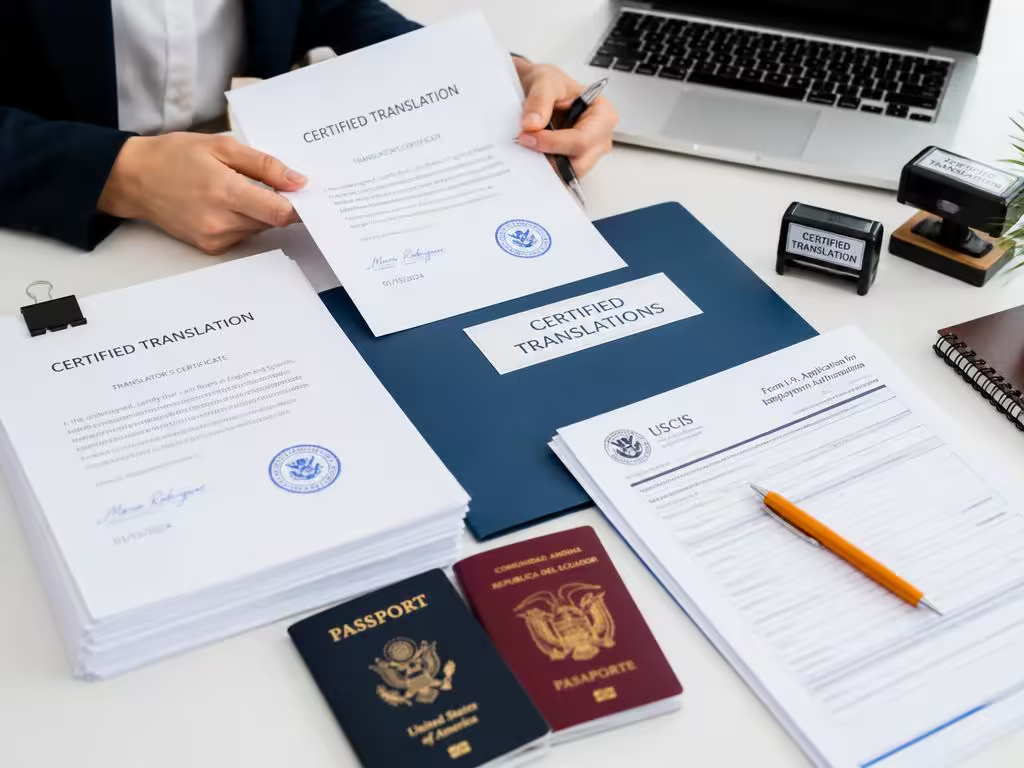
- Certified translators provide notarized certificates of accuracy accepted by USCIS.
- Conference interpreters manage simultaneous flow for large multilingual events.
The Human Touch in a Digital Age
Machine translation has improved dramatically, but it still struggles with context, idiom, and cultural sensitivity. A machine can translate the words "break a leg" literally; a human knows to wish someone good luck. In high-stakes settings—immigration interviews, informed consent, asylum hearings—there is no substitute for a trained professional who can read the room, ask for clarification, and advocate for accuracy.
Building Bridges, One Word at a Time
At Bylyngo, our mission is to remove language barriers so people can access justice, healthcare, education, and opportunity. Every assignment is a chance to connect cultures, protect rights, and build trust. Whether you need a single document translated or a full team of interpreters for a multinational conference, the art remains the same: listen deeply, understand completely, and communicate clearly.